The Quiet that Knows
"Yesterday I was clever, so I wanted to change the world. Today I am wise, so I am changing myself."
— Rumi
I used to know exactly who I was.
She was confident. Social. Alive in a way that made sense to everyone around her. She loved the energy of a full room, the pull of a life that looked right from the outside. Law. Trading. The wildness of socialising. The aliveness of it all. That version of me had it figured out. Or so it seemed.
What I didn't know then was that I had built that life almost entirely from the outside in. From what I had read, watched, absorbed. From what the world quietly tells you a successful, put together woman looks like. I romanticised everything. My career. What a family should be. What friendship looks like. What success feels like. I curated it all carefully and called it living.
For a long time it felt alive.
Underneath the aliveness was something else. Something I couldn't name for years. With every additional piece of myself I curated, every carefully constructed version of who I was supposed to be, I felt it more. A tightening. A quiet suffocation. Like I was building a life that fit perfectly from the outside but left no room to breathe from within.
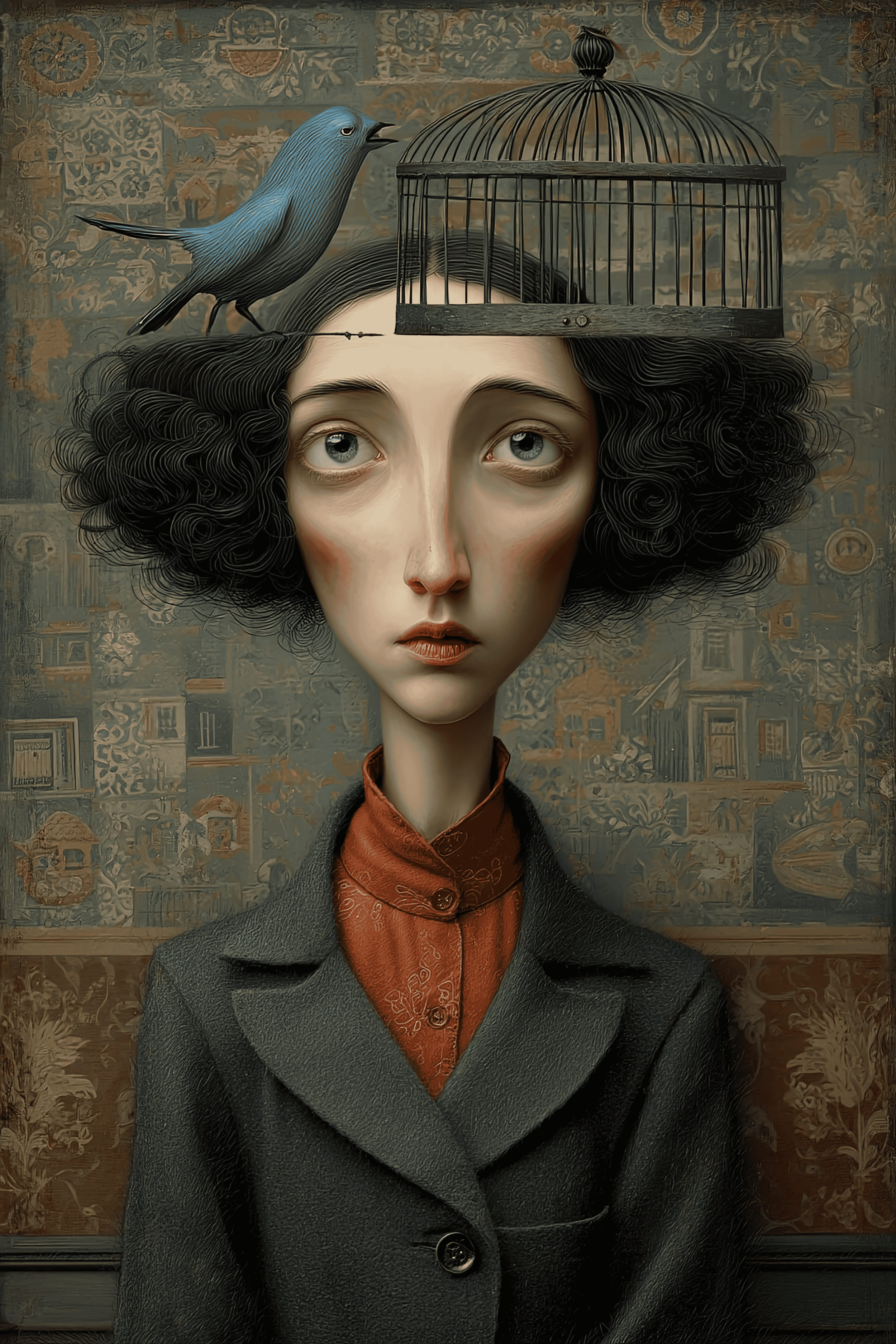
I felt alive and caged at the same time. I didn't even know those two things could exist together. I didn't even know I was pretending.
That is perhaps the most frightening thing about conditioning. It doesn't feel like conditioning. It feels like life.
The morning everything shifted I was at my desk. Crying in a way I couldn't contain or explain or make stop. Not from a single event. Not from anything anyone had done. From something that had been building quietly for years and had finally reached the place where it could no longer be managed.
The sadness. The anxiety. The nausea. And underneath all of it, a realisation arriving with complete clarity. What I had built was not really that important. Not to the part of me that actually mattered.
After two hours I got up. Went home. Never returned.
Not because I planned it that way. Not because I had somewhere better to be. Because the body and the soul together had finally made a decision the mind had been refusing to make for years. Once that decision was made there was nothing left to argue about.
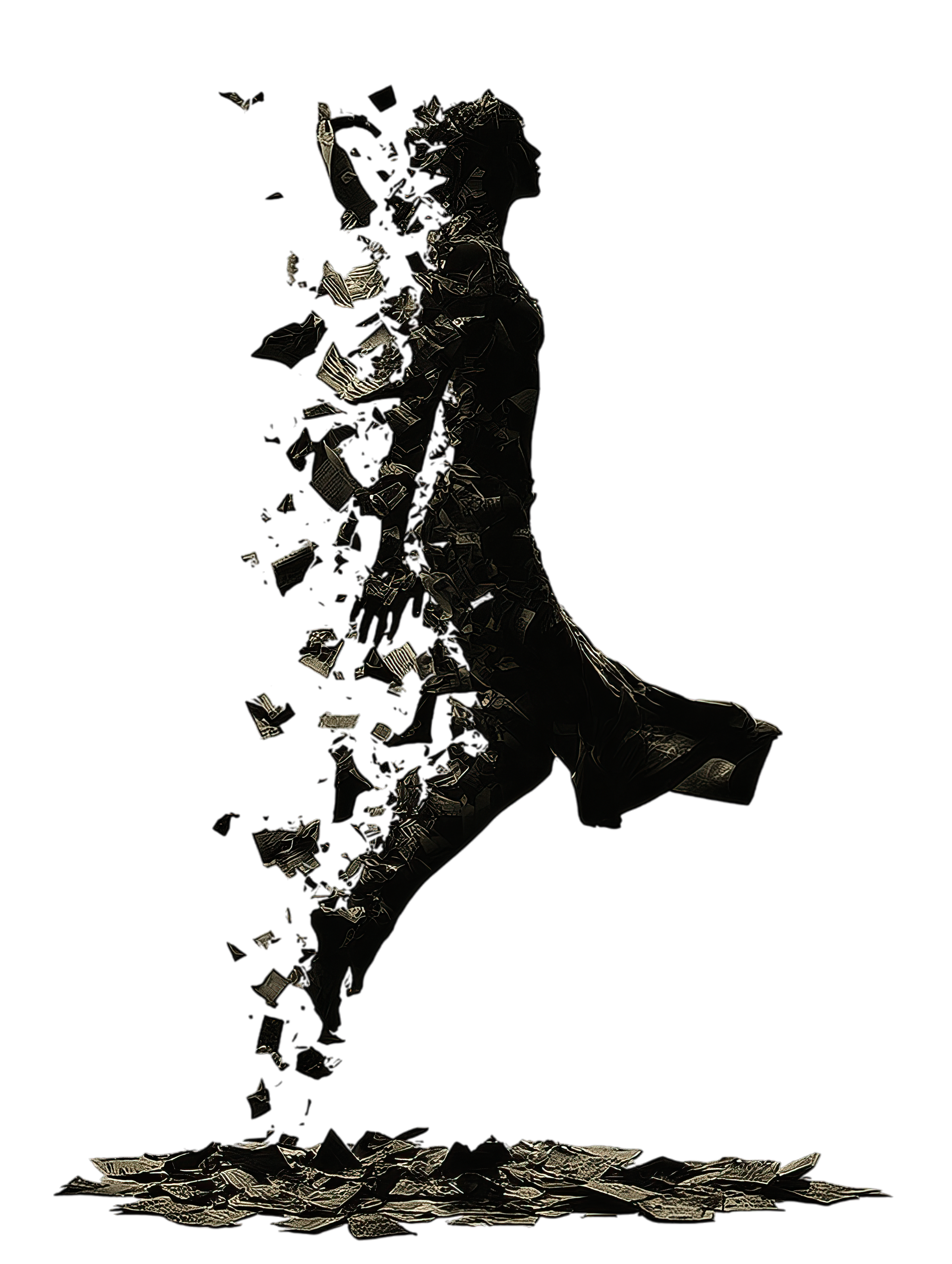
The unravelling didn't happen all at once. It was slow and painfully long and not always recognisable as unravelling while it was happening. There was no single moment of clarity. Just a gradual loosening of something that had been held very tightly for a very long time.
Someone once said that we spend the first half of our lives building the ego. The second half taking it apart. Carl Jung wrote it as psychology. Rumi lived it as poetry. Both arrived at the same truth.
That the constructed self is not the whole self. It is just the first chapter.
The veil Rumi spoke of is not something done to us by force. It is built slowly, quietly, with our own hands. Layer by layer. From every expectation we absorbed and called our own. Every version of ourselves we performed until we forgot we were performing. By the time it is fully in place you don't see it as a veil. You see it as you.
That is what I was living inside. Without knowing it.
What I want for my daughter is different. Not a life without challenge or struggle. But a life where she knows herself well enough to recognise the difference between what is truly hers and what was handed to her. Where she can question early rather than unravel late. Where the years spent finding herself don't come at the cost of decades spent being someone else.
The dismantling doesn't have to wait until midlife. It doesn't have to arrive as a crisis. When a child is raised to know her own mind, to trust her own feelings, to question what the world tells her rather than absorb it blindly, the veil never fully forms. She gets to live from the inside out from the beginning.
That is the gift I am trying to give her. The one nobody gave me. The one I had to find my own way back to.
The dismantling is not a failure. It is the point. The second chapter of a life lived honestly. It is available to anyone willing to get quiet enough to feel it.
It is never too late to begin.
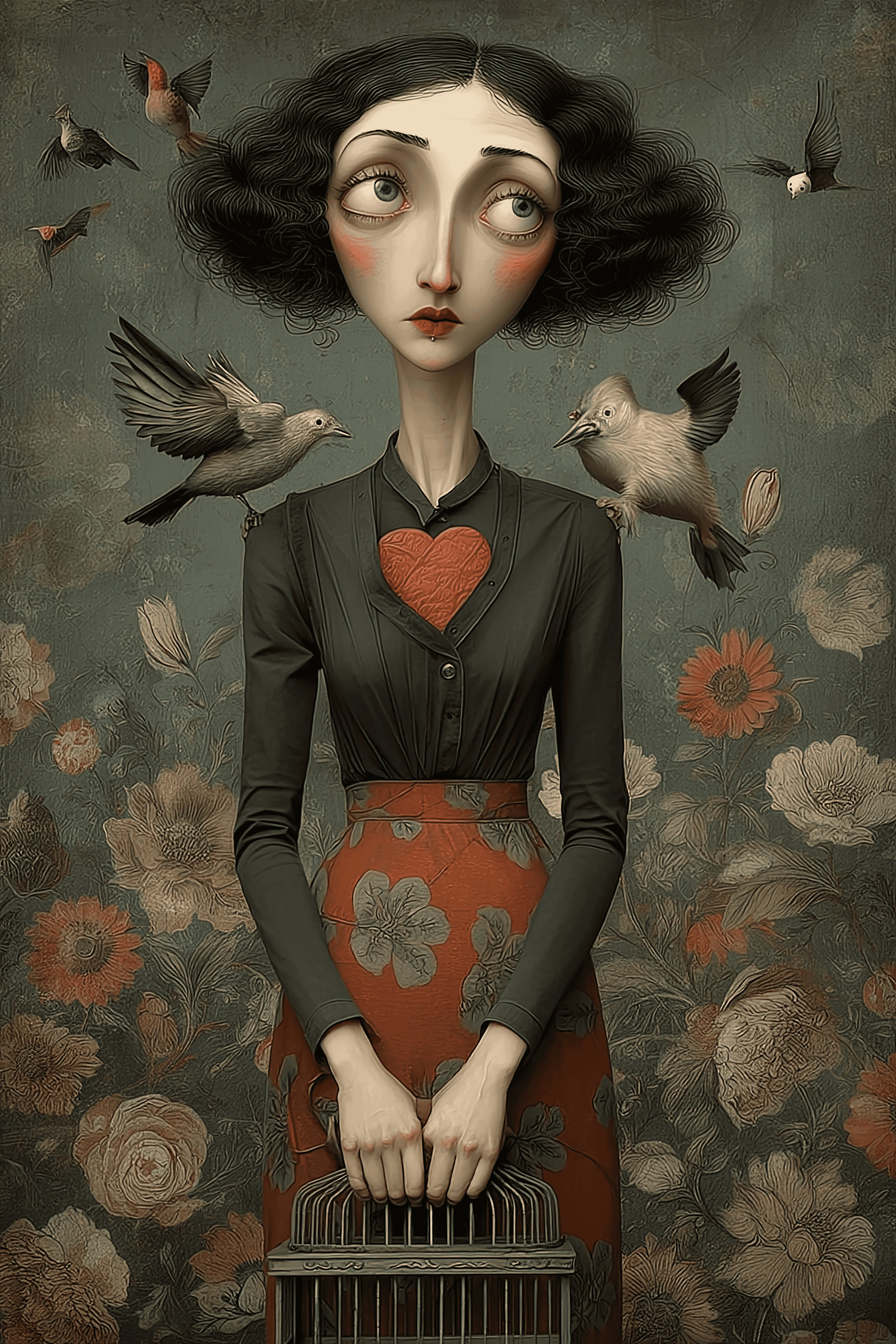
I am learning to follow my heart rather than my mind. This is not a poetic way of saying I gave up thinking. It is a description of something real and daily and at times genuinely difficult.
The mind is fast. Loud. Convincing. It knows which memories to use. It speaks in the language of logic and safety and what other people think. It is very good at its job.
The heart is quieter. Slower. It doesn't argue or defend or explain itself. It simply shows you how something feels. And then it shows you how something else feels. And it waits for you to notice the difference.
There is no roadmap for this kind of life. No formula. No guarantee. No version of success I can point to and say that is where I am going. Just a feeling. Just the quiet certainty of something that keeps pulling me forward even when everything else says stop.
I have tasted the peace that comes from following it. I cannot unfeel that peace. I don't want to.
Something is shifting in the world right now. I feel it not in headlines or movements but in conversations. With strangers. With people I have known for years. With family. With people who find their way into my world without either of us quite knowing why.
More and more people are arriving at the same quiet edge. The place where everything they built stops feeling like enough. Where the life that made sense from the outside starts to feel hollow from within. Where something deeper begins to ask for more.
The heart is not loud. It does not demand or insist. It speaks in feeling rather than words and it will wait as long as it needs to.
It has always known.
Not the version of you that performs for the world. The version underneath. The one that existed before you learned to be careful. Before you learned to be contained. Before you decided that being understood was more important than being true.
That is the one worth listening to.
Have you heard yours lately.
— Amrit